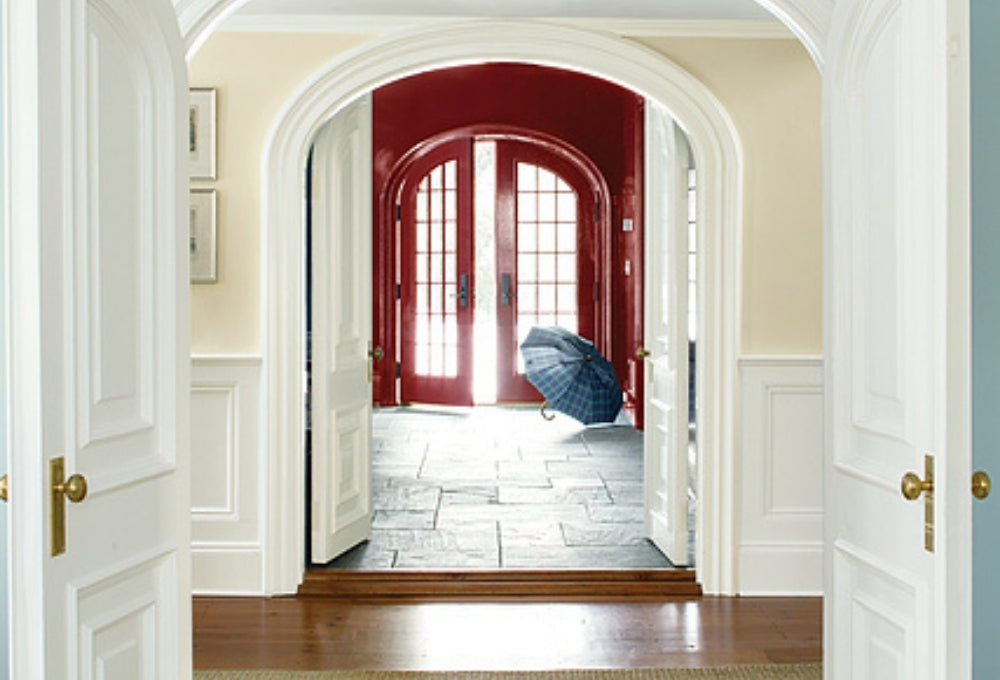
Your doorway can provide a dramatic entrance and decorative frame for a room, but it may also show signs of wear and tear. Providing a fresh coat of paint can enhance the look of the entire room.
We recommend using a sheen that is higher in gloss than what is on your walls as this will showcase your trim and doors by separating them from the rest of your walls. However this is a personal choice. To provide a professional look, use a good quality paint brush rather than a roller.
1. Start by painting your doorframe from top to bottom.
2. Then, with the door ajar, if you haven’t removed it, start painting the trim by carefully cutting in near the inside wall.
3. Then, continue painting around the rest of the trim.
4. Wait until the paint dries completely before adding a second coat to the door frame and trim.
For best results, ALWAYS READ THE PAINT CAN LABEL. Professionals read the paint can labels to get the paint manufacturers’ most up-to-date information and instructions on the use of each specific paint. Every paint is different, and the labels provide important information, such as the average coverage area per gallon, drying times, number of coats needed, and surface preparation requirements. The labels also give specific safety information that should be carefully adhered to.
Downloadable PDF: How to Paint Door Frames