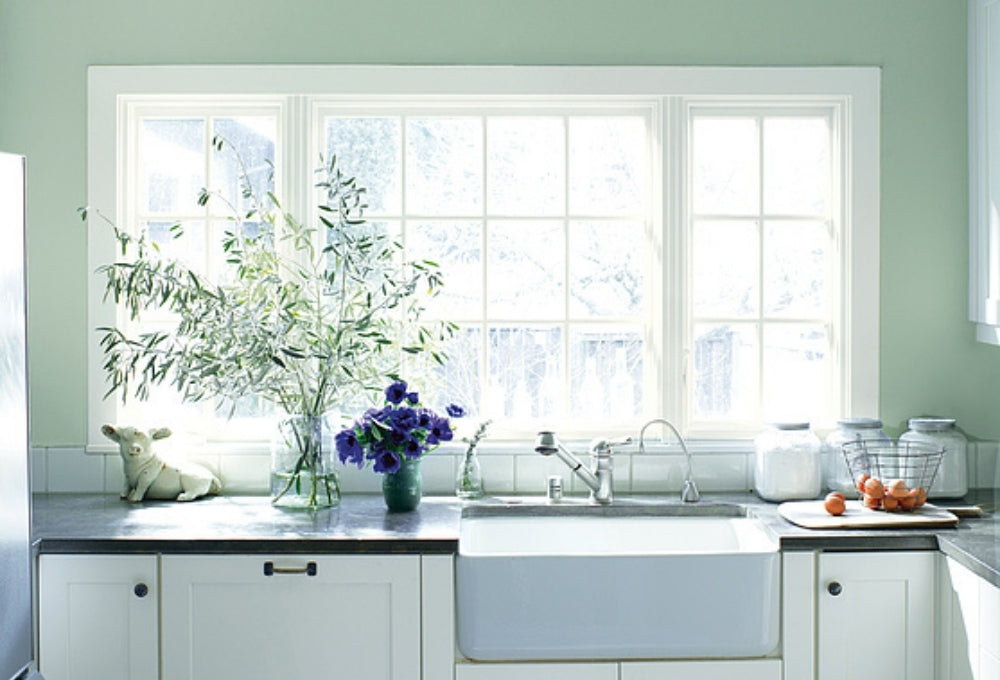

Here are a few simple tips to simplify the job of painting your windows.
1. You will need a small brush for this project. Depending on the size of the molding, a 1 ½ inch to 2 ½ inch angled brush will allow you to “cut in” on the edges and hard-to-reach parts of the window frame.
2. Remove the hardware you don't want painted, saving it in a small plastic bag or container so they don’t get lost.
3. Work from the top of the window down and start by painting the movable portion of the window.
4. Paint the sash and the trim first, leaving the windowsill last to avoid touching wet paint.
5. Paint slowly and carefully. Avoid getting paint in the sliding tracks and inadvertently “gluing” your window shut with paint.
If you have windows that move up and down:
- Raise the lower sash up and lower the upper sash down and paint the lower half of the upper sash.
- Raise the upper sash back up and lower the lower sash and paint the upper half of the upper sash.
- Raise the lower sash a bit and paint the lower sash.
- Paint the trim and the windowsill once the painted sashes are dry. When you have finished painting and the paint is dry, use a window paint scraper to remove any paint that has gotten on the glass.
For best results, ALWAYS READ THE PAINT CAN LABEL. Professionals read the paint can labels to get the paint manufacturers’ most up-to-date information and instructions on the use of each specific paint. Every paint is different, and the labels provide important information, such as the average coverage area per gallon, drying times, number of coats needed, and surface preparation requirements. The labels also give specific safety information that should be carefully adhered to.
Downloadable PDF: How to paint windows